
IP ratings explained: what you need to know

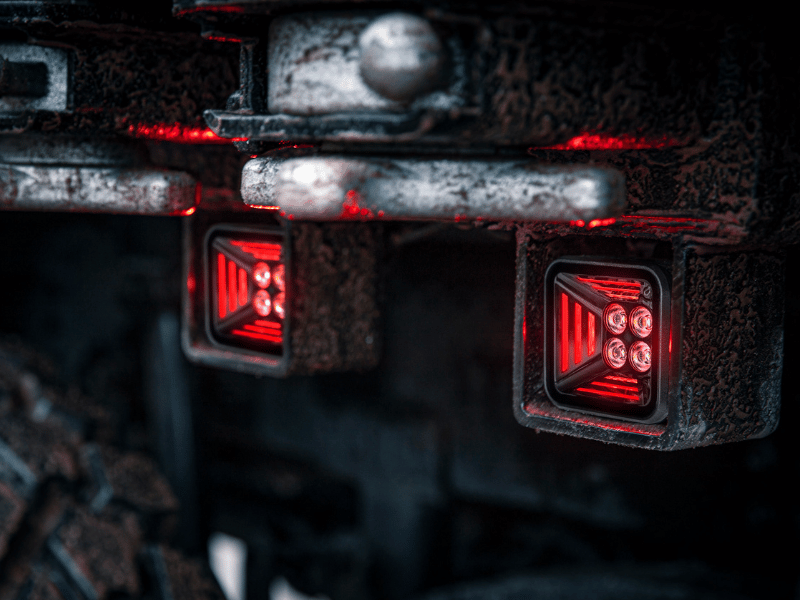
An LED bar, work light, or other truck lighting has to endure a lot on the road. Rain, mud, dust, road salt, and of course a thorough wash after a dirty trip. That is why you see an IP rating on almost every LED lamp.
But what do those two digits actually mean? And which IP rating do you need for your truck?
In this blog, we explain it simply. This way, you know what to look for when searching for new lighting for your truck, trailer, tractor, 4×4, or other work vehicle.
What does an IP rating mean?
IP stands for Ingress Protection. This classification indicates how well a product is protected against the penetration of solid particles, such as dust and dirt, and against water.
An IP code consists of two digits:
- The first digit indicates the protection against dust and solid particles.
- The second digit indicates the protection against water.
The higher the digit, the better the protection against the relevant influences.
An example is IP68. The 6 means the lamp is completely dust-tight. The 8 indicates that the lamp is suitable for long-term exposure to water according to the manufacturer’s test conditions.
For lighting on a truck, that is naturally interesting. After all, you want your lamp not only to provide good light but also to withstand the conditions in which you use it daily.
Which IP ratings will you encounter?
| IP rating | Dust-tight | Water-resistant |
| IP65 | ✔ | Water jets |
| IP67 | ✔ | Briefly submerged |
| IP68 | ✔ | Long-term submerged |
| IP69K | ✔ | High pressure & hot water |
IP65
IP65 offers good protection against dust and water jets. This makes this classification suitable for many normal outdoor applications.
Think, for example, of lighting on a passenger car, camper, or commercial vehicle. When a lamp is mainly exposed to rain and splashing water, IP65 can be a great choice.
However, is the lighting regularly exposed to a lot of water, mud, or harsh conditions? Then it is wise to look for a higher IP classification.
IP67
With IP67, protection goes a step further. A lamp with this classification is completely dust-tight and resistant to temporary immersion in water according to the applicable test conditions.
That is why you regularly see IP67 in LED lighting for vehicles.
For a truck, trailer, or 4×4 that regularly deals with rain, splashing water, and dirt, IP67 is an interesting choice. This classification is also more than suitable for many work lights.
IP68
IP68 offers the same dust-tight protection as IP67 but is designed for longer-term exposure to water, within the conditions that apply to the product.
That makes IP68 interesting for lighting that has to endure a lot. Think, for example, of a truck that covers many kilometers daily, a tractor that works in all kinds of weather, or a 4×4 that regularly goes off the beaten path.
Additionally, you see IP68 a lot in professional LED bars and work lights. For intensive use, this is certainly a classification you can look out for.
IP69K
IP69K is a classification you mainly encounter in products that must be able to withstand very harsh conditions.
In addition to complete protection against dust, lighting with IP69K is resistant to powerful water jets under high pressure and high temperature according to the relevant test method.
For truckers, that is an interesting feature. After all, your truck doesn’t just have to handle rain and dirt on the road. After a long trip, the pressure washer is often used on it as well.
That is why IP69K is interesting for vehicles and machines that are regularly cleaned intensively or used under heavy conditions.
You see this classification, for example, on:
- Trucks
- Agricultural machinery
- Construction machinery
- Earthmoving machinery
- Municipal vehicles
- Work equipment
Is a higher IP rating always better?
Not necessarily.
An IP rating only says something about the protection against dust, dirt, and water. It doesn’t tell you whether a lamp is actually the best choice for your application.
Therefore, look at other features of the lighting as well. The light output, light pattern, build quality, voltage, and any ECE approvals are just as important.
A powerful LED bar with a high IP rating sounds great, of course, but if the light pattern doesn’t suit your application, it won’t be of much use on the road.
That is why it is better to look at the complete picture.
IP rating and washing your truck
A truck has to endure a lot during a trip. Rain, dust, mud, and road salt all end up on your lighting. Then, of course, you want to get that same truck nice and clean again.
That is why the IP classification is extra relevant for truck lighting.
A good IP rating helps prevent moisture and dirt from entering the lamp housing. Especially when your lighting is in a place where a lot of water and dirt accumulate, it is wise to take this into account when purchasing.
Always pay attention to the full product specifications. An IP classification does not mean you can just spray every lamp from up close with a pressure washer. Therefore, always follow the manufacturer’s instructions.
In short
IP ratings tell you how well a lamp is protected against dust and water. This is especially important for truck lighting, as the lamps have to endure a lot on the road.
IP67 is a good baseline for many vehicle applications. For more intensive use, IP68 may be a better choice. If your lighting also regularly receives heavy cleaning or is used under truly harsh conditions, then IP69K is interesting.
In short: when choosing new lighting, don’t just look at how many lumens a lamp has or what it looks like. Also check the IP rating and choose a classification that suits your truck and the conditions in which you drive.
This way, you can be sure that your lighting not only performs well but can also take a beating.


