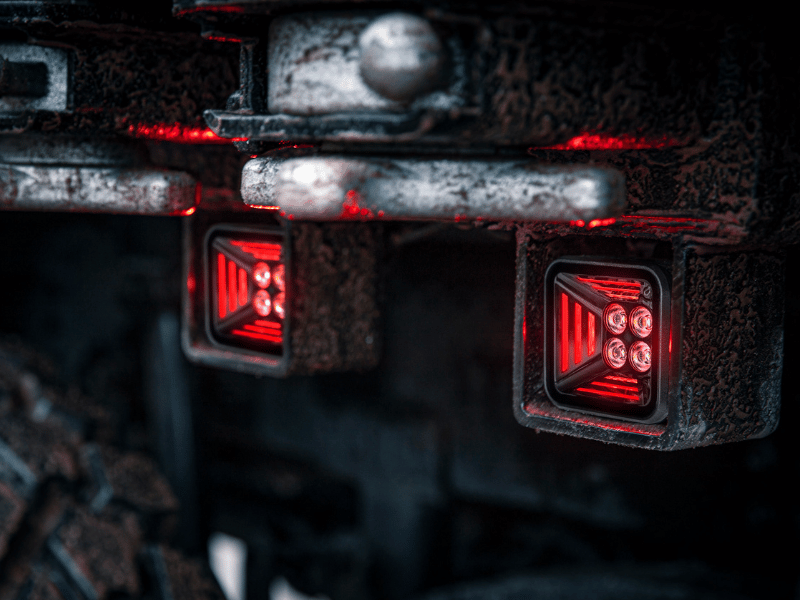

Condensation in your lamp: when is it a problem?

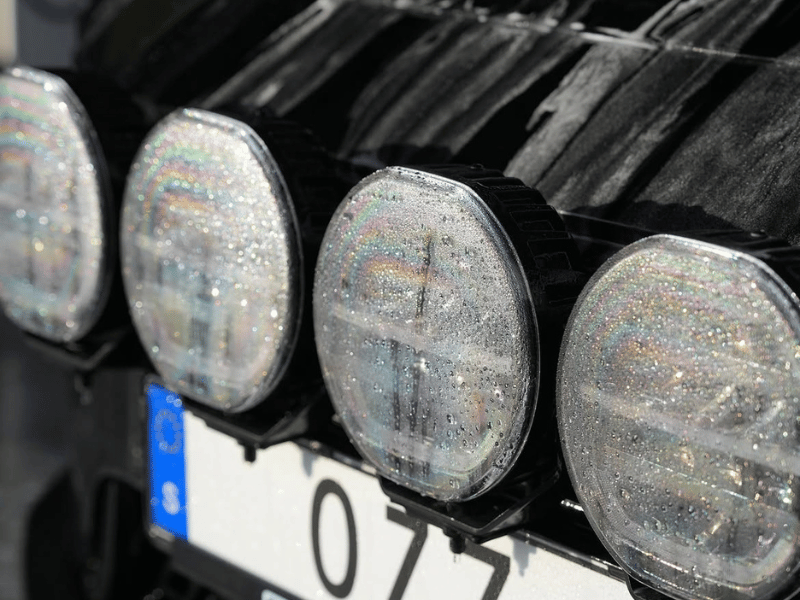
Do you suddenly see moisture or condensation on the inside of your LED lamp, LED bar, or work light? Don’t panic. A little condensation doesn’t immediately mean your lamp is leaking or broken.
Especially with a truck that stands outside day and night, lighting regularly deals with large temperature differences. This can cause temporary condensation to form on the inside of the lens.
But when is that normal and when should you take action? We explain it below.
A little condensation is often normal
An LED lamp is not always completely hermetically sealed. With temperature differences, moist air in the lamp can condense against the colder inside of the lens.
This can happen, for example, after a cold night, during rainy weather, or when the lamp cools down after a drive. As soon as the lamp warms up or the environment becomes drier, the condensation usually disappears on its own.
Many vehicle lamps are therefore equipped with a ventilation membrane. This helps to absorb pressure differences inside and outside the housing and to discharge moist air.
Does the condensation disappear by itself? Then there is usually nothing wrong.
When should you pay attention?
A few light condensation spots are different from a lamp in which water actually remains standing.
If the condensation remains present for a long time, if clear water droplets form, or if you even see water at the bottom of the lamp? Then it is wise to check the lighting further.
Also, when the lamp functions less well, moisture can be an indication that something is not right.
What can cause moisture to get into your lamp?
There are various causes. Some are harmless, while others can indicate damage or a problem with the seal.
| Cause | What can happen? |
| Temperature difference | Light condensation can occur temporarily and disappear on its own. |
| Damaged lens | Water can enter through a crack or fracture. |
| Damaged housing | Stone chips or a collision can affect the seal of the lamp. |
| Defective seal | Water can penetrate the housing through a damaged seal. |
| Incorrect mounting | A mounting that is too tight can cause tension on the housing. |
| Modified lamp | Painting, wrapping, or sealing off ventilation can disrupt the operation of the lamp. |
| High-pressure cleaner | If used incorrectly, water can be forced past seals under high pressure. |
Be careful with the high-pressure cleaner
Washing a truck with a high-pressure cleaner is of course no problem. What you should pay attention to is where you aim the jet.
Keep sufficient distance and do not aim the high-pressure jet directly at seals, ventilation openings, or cable entries. Especially when you get very close to the lamp, the high water pressure can cause problems.
Can a high IP rating prevent condensation?
Not entirely.
An IP68 or IP69K rating means that a lamp is well protected against dust and water from the outside. However, it does not mean that condensation cannot form under any circumstances.
Even with a well-sealed and high-quality lamp, temperature differences can cause temporary condensation.
Want to know exactly what IP65, IP67, IP68, and IP69K mean? Then read our blog about IP ratings.
Is condensation covered under warranty?
That depends on the situation and the cause.
Light condensation that disappears on its own is normal and does not automatically mean there is a defect. However, if water remains in the lamp or if something seems wrong with the seal? Then there may be a defect.
| Situation | Warranty* |
| Light condensation that disappears on its own | No |
| Water remains in the lamp | Possible* |
| Defective seal from the factory | Possible* |
| Damage due to stone chips or collision | No |
| Damage due to incorrect mounting | No |
| Damage due to incorrect use of a high-pressure cleaner | No |
| Lamp modified, for example painted or wrapped | No |
*Each warranty claim is assessed individually based on the cause and the condition of the product.
How to reduce the chance of moisture problems
You cannot always completely prevent condensation. You can, however, significantly reduce the chance of real moisture problems.
- Check your lighting regularly for cracks and damage.
- After stone chips or a collision, check if the lens and housing are still intact.
- Do not use a high-pressure cleaner directly on seals and connections.
- Mount the lamp according to the instructions and do not tighten mountings unnecessarily.
- Ensure that cables and connections are well protected against moisture.
- Do not seal off ventilation openings and do not modify the lamp housing without reason.
Condensation or real water?
A little bit of condensation on the inside of your LED lamp is therefore usually no reason to sound the alarm immediately. Especially with fluctuating temperatures, this can simply occur.
Does the condensation disappear by itself? Then there is usually nothing wrong. If water remains, if it gets worse, or if the lamp no longer works properly? Then it is time to check the lamp and seals.
Are you unsure about the situation? Then contact Truckned. We are happy to take a look with you.